
Hot Yoga Humidity Level: Best Practices for Studio & Home Setup
When people think of heated yoga, they immediately focus on the thermostat. They assume that hitting 105°F (40.6°C) is the only factor that dictates a successful, intense practice. But if you have ever stepped into a heated room and felt like your throat was parched, your skin was uncomfortably tight, and you were struggling to draw a deep breath, you didn’t have a temperature problem.
You had a humidity problem.
Moisture in the air is the secret weapon of professional yoga studios. Without the right hot yoga humidity level, high heat can make your practice feel brutal, exhausting, and potentially unsafe. Whether you are an aspiring teacher learning how to set up a professional space or a practitioner building a DIY hot yoga room at home, mastering relative humidity is the absolute key to a successful session.
So, what is the **best humidity for hot yoga**, and how do you maintain it? In this guide, we will analyze the physiology of sweating under thermal stress, explore the differences between home and studio moisture management, and outline the best practices for controlling your **hot yoga room humidity** to ensure your practice remains safe, deep, and fully restorative.
The Physiology of Sweat: Why Raw Heat Is Not Enough
To understand the role of moisture, we must look at how the human body regulates its temperature. During a heated class, your body relies primarily on **evaporative cooling** (sweating) to prevent overheating. When sweat evaporates from your skin, it absorbs thermal energy from your body, lowering your core temperature.
However, the rate of sweat evaporation is directly governed by the moisture content of the surrounding air, known as relative humidity (RH).
If you practice in dry heat (RH under 30%), sweat evaporates off your skin almost instantly. While this might sound clean, it causes several physiological issues:
- Respiratory Irritation: Dry, hot air strips moisture from your mucous membranes. This can lead to a dry throat, burning sensation in your nose, and a persistent cough during pranayama breathing.
- Rapid Dehydration: Because sweat evaporates instantly, you may not realize how much fluid you are losing, leading to rapid dehydration and subsequent muscle cramping.
- Skin Dryness: The skin dries out and loses its natural elasticity, which can lead to chafing against clothing and yoga mats.
Conversely, if the **hot yoga room humidity** is too high (RH over 60%), the air is fully saturated with water vapor. Sweat cannot evaporate because the air has no capacity to hold more moisture. Instead, sweat pools on your skin, your heart rate climbs as your body tries desperately to cool down, and you risk heat exhaustion or heat stroke.
This is why achieving the **ideal humidity for hot yoga** is not just about comfort—it is a fundamental safety requirement.
The Golden Ratio: Finding the Ideal Humidity for Hot Yoga
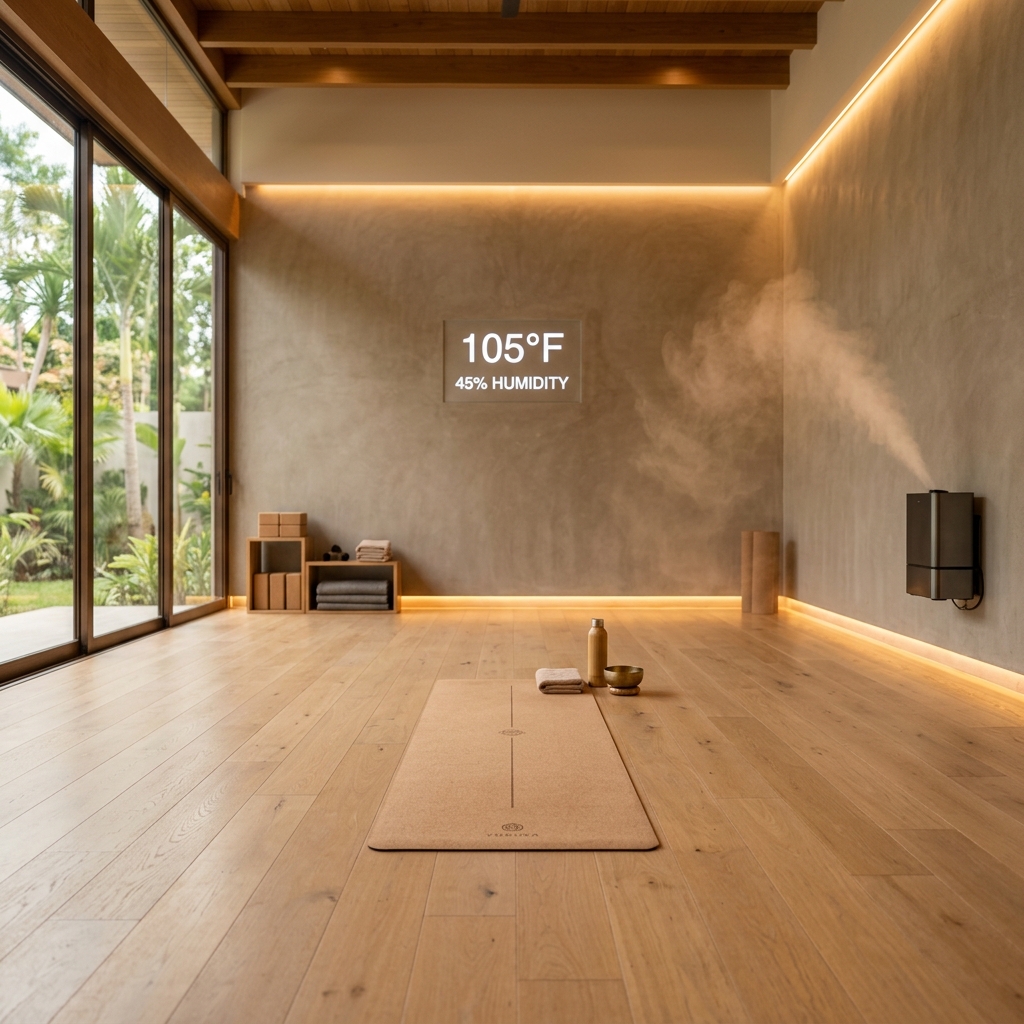
For standard heated classes (typically between 95°F and 105°F), the consensus among exercise scientists and experienced instructors is that the **ideal humidity for hot yoga** is between 40% and 50% relative humidity (RH).
In this golden range, the air contains enough moisture to prevent your respiratory tract from drying out, while leaving enough evaporative capacity for your body to cool itself efficiently. This creates what practitioners call the “tropical wrap”—a warm, humid blanket that deeply warms the joints and connective tissues, allowing for safe, stretching without feelings of suffocation. This is the **best humidity for hot yoga** because it optimizes both safety and physical performance.
When selecting your gear for a humid room, your mat choice is crucial. Closed-cell mats, such as the Manduka PRO Yoga Mat or the folding Stakt Foldable Yoga Mat Pro, are ideal because they repel moisture. Instead of absorbing sweat and breeding bacteria, moisture pools on top and can be wiped clean in seconds, though using a microfiber towel is essential to maintain traction.
Humidification Best Practices: Home vs. Commercial Studio
Maintaining a stable yoga studio humidity level requires different strategies depending on the scale of your space.
For Home Practitioners (The DIY Setup)
If you are heating a small room or bathroom for a home practice, space heaters naturally strip moisture from the air, dropping humidity levels to under 20%. To counteract this, you must introduce a dedicated moisture source to maintain a proper **hot yoga humidity level**.
- Use a Warm-Mist Humidifier: Always select a warm-mist humidifier for yoga. Cool-mist humidifiers disperse fine, cool water droplets that absorb heat to evaporate, which cools the room down. A warm-mist unit boils the water internally and releases clean, warm steam, raising both humidity and room temperature.
- The Pre-Heat Protocol: Turn on your humidifier 20 to 30 minutes before your practice. This gives the moisture time to blend with the rising heat from your heaters, ensuring the room feels warm and easy to breathe in the moment you start.
- Draft Sealing: Use rolled-up towels under the door and close window blinds to prevent moisture from escaping into cooler, drier areas of your home.
For Commercial Studios (The Professional Setup)
In a commercial studio, residential humidifiers will fail due to the sheer volume of space and the air exchange rates required by building codes. Commercial setups require:
- Wall-Mounted Ultrasonic Humidifiers: These use high-frequency sound waves to create a micro-fine mist that absorbs instantly into the air without dripping on floors.
- Digital Humidistats: The humidifiers are linked to sensors that monitor the air continuously. If the relative humidity drops below 40% (which can happen when fresh air is introduced via the HVAC ventilation system), the system automatically triggers the humidifiers until it hits exactly 45%, and then shuts off.
- Dehumidification Controls: High-end HVAC systems have reheat coils or dedicated commercial dehumidifiers to pull excess moisture out of the air immediately after class, preventing structural mold and keeping the studio smelling fresh.
The Temperature and Humidity Monitoring Checklist
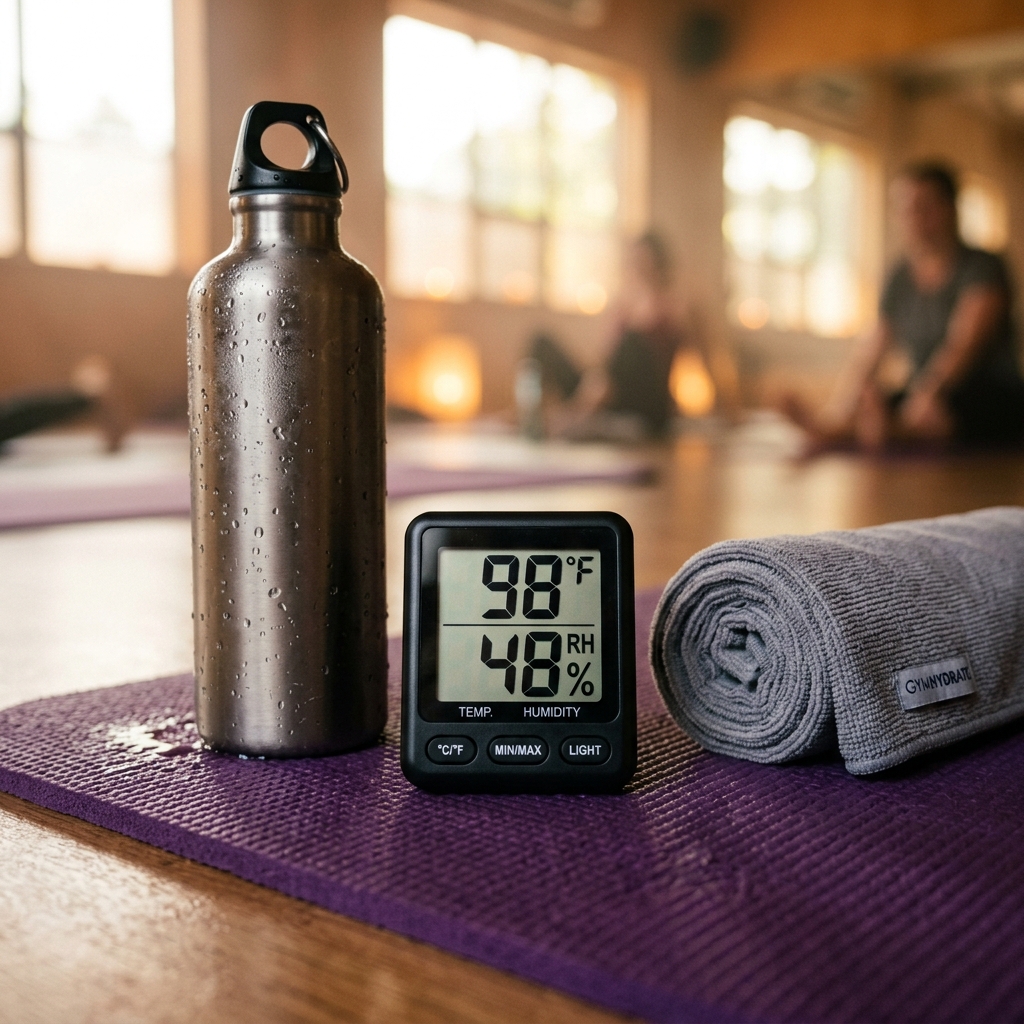
To take the guesswork out of your environment, invest in a digital hygrometer. Place it at eye level near your mat, away from direct heater draft or humidifier steam plumes. Use this comparison table to evaluate your environment:
| Room Status | Temperature Range | Relative Humidity (RH) | Somatic Feedback / Feeling |
|---|---|---|---|
| Danger Zone: Dry Heat | 95°F – 105°F | Under 30% | Dry, scratchy throat; burning nasal passages; tight joints; rapid dehydration. |
| The Sweet Spot (Optimal Range) | 98°F – 105°F | 40% – 50% | Deep, clean sweat; comfortable breathing; supple muscles; balanced energy. This is the **best humidity level for hot yoga class** settings. |
| Danger Zone: Suffocating Wet Heat | 95°F – 105°F | Over 60% | Heavy, suffocating air; sweat pools without evaporating; rapid heart rate; dizziness. |
🛑 Safety Guidelines for Practicing in Humid Heat
Because humidity increases the “feels-like” temperature (heat index), practicing in a humidified room places additional demand on your cardiovascular system. Follow these guidelines to practice safely:
Hydration and Mineral Replacement
Sweating in a humid room is highly efficient, meaning you will lose significant water and minerals. Drink plenty of water throughout the day before your practice. Keep an insulated bottle of cold water next to your mat. After class, replenish your electrolytes (sodium, potassium, and magnesium) rather than drinking plain water alone, which can cause mineral imbalances. For more hydration strategies, read our guide on hot yoga for beginners.
Clothing Choice
Never wear heavy cotton clothing. Cotton behaves like a sponge, absorbing sweat and holding it against your skin, which prevents cooling and increases skin friction. Wear technical, moisture-wicking synthetic fabrics (nylon and polyester blends) that help transport sweat away from the body. Review our guide on what to wear to hot yoga to choose the best gear.
Acclimatization
Allow your body time to adapt to humid heat. If you are setting up a home studio, start with 90°F (32°C) and 40% humidity, and slowly scale up to 100°F and 45% humidity over a period of two weeks as your sweat glands and cardiovascular system adapt. If you want a more detailed breakdown of heating equipment, check out our guide on infrared heaters for yoga studio and home setups.
Frequently Asked Questions
What is the optimal hot yoga humidity level?
The optimal relative humidity level for hot yoga is between 40% and 50%. This provides the perfect balance of joint lubrication and respiratory comfort, while still allowing sweat to evaporate efficiently for body temperature regulation.
How can I increase the hot yoga room humidity in my home setup?
The most effective method is using a warm-mist humidifier. Unlike cool-mist models, warm-mist humidifiers release warm steam that helps heat the room while adding clean moisture. Turn it on high 20 to 30 minutes before your class to allow the moisture to disperse fully.
What is the best humidity for hot yoga to sweat safely?
The best relative humidity is strictly between 40% and 50%. If the humidity drops below 30%, it is too dry, causing dehydration. If it rises above 60%, sweat cannot evaporate, preventing your body from cooling itself and raising the risk of heat exhaustion.
Does humidity make hot yoga feel harder?
Yes, higher relative humidity increases the heat index, making the room feel hotter than the actual temperature reading. It increases your heart rate and sweat production, making the practice feel more physically demanding than dry heat.
Should I turn off my humidifier during class?
If you are practicing at home in a small, closed room, you can turn off the humidifier once class starts if the hygrometer reads 45%. The moisture from your breath and sweat will naturally maintain the humidity level for the rest of the session.
Mastering the Environment
Unlocking the full potential of your hot yoga practice is about balance. By moving beyond raw heat and focusing on the **ideal humidity for hot yoga**, you create a supportive environment that protects your lungs, enhances your flexibility, and keeps you safe.
Whether you are managing a busy commercial studio or preparing your personal home sanctuary, prioritize moisture just as much as you prioritize heat. Roll out your mat, check your hygrometer, take a deep, humid breath, and enjoy your practice!
Medical Disclaimer: This article is for educational and informational purposes only. Practicing hot yoga in high humidity increases thermal stress. Consult your physician before practicing hot yoga if you have cardiovascular conditions, blood pressure issues, respiratory illnesses, or are pregnant. Exit the heated space immediately if you experience dizziness, nausea, or faintness.
Ready to Start Your Training?
Become a certified Hot Yoga teacher today. Explore our flexible training programs.