
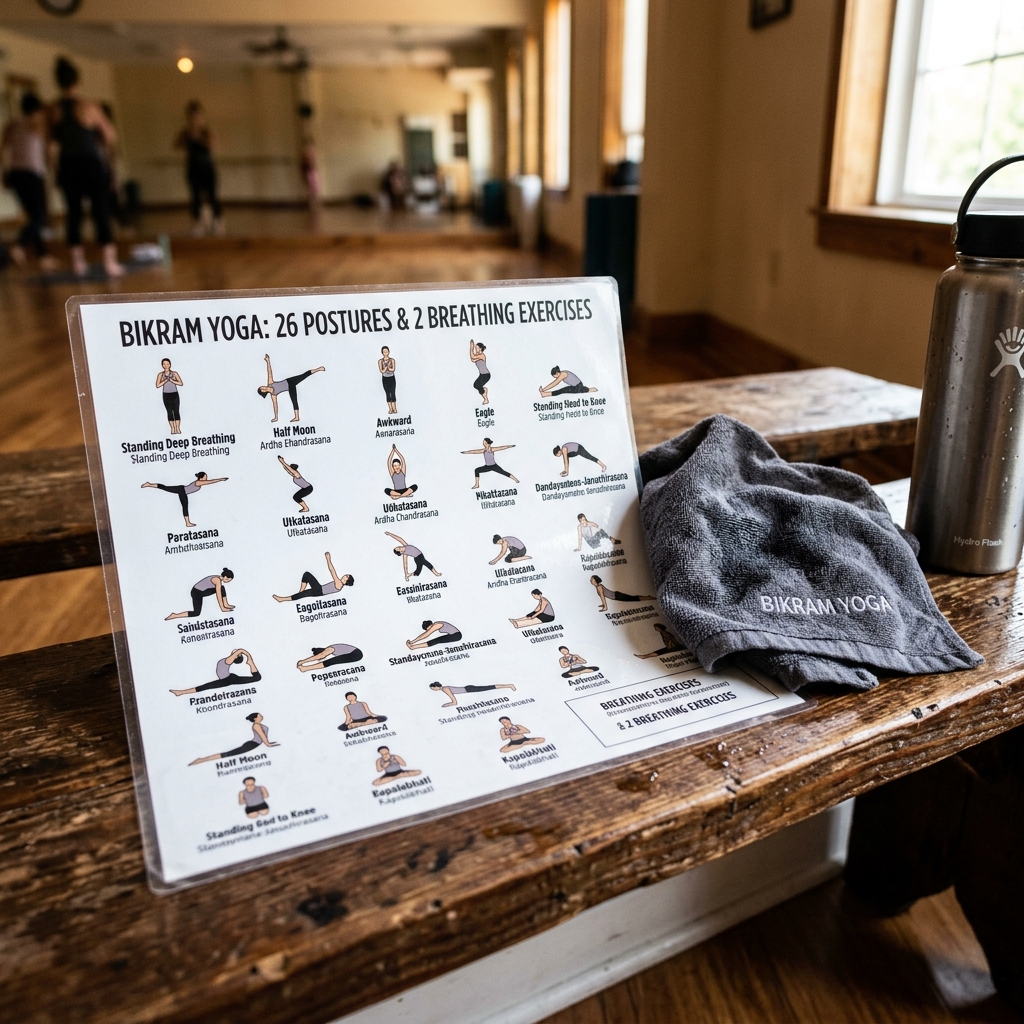
Practicing the traditional sequence of 26 postures and two breathing exercises in a room heated to 105°F with 40% humidity for exactly 90 minutes is a profound test of endurance. Because of the duration and intense climate, a single session demands significant energy. If you are tracking your fitness metrics, understanding the science behind bikram yoga calories burned can help you set realistic goals. Unlike modern hot Vinyasa classes which vary in duration and posture choice, the consistency of the Bikram sequence has allowed researchers to conduct precise metabolic studies. Let’s look at the scientific findings on energy expenditure, compare the demands of standing vs floor series, and review safety guidelines for managing this hyperthermic workout.
Bikram Yoga Metabolic Quick Facts
Before reviewing the studies, here is a summary of the metabolic demand of a standard 90-minute Bikram class:
- Average Calorie Range: Men typically burn 450 to 640 calories; women typically burn 330 to 460 calories.
- Cardiovascular Workload: Heart rate averages 140 beats per minute, similar to a moderate brisk walk or jog.
- Duration Factor: The 90-minute duration makes the cumulative calorie burn high compared to shorter classes.
- Posture Consistency: The fixed 26-pose sequence makes tracking progress and acclimatization predictable.
1. The Academic Studies on Bikram Energy Burn
To determine the true calorie burn, researchers at Colorado State University measured the oxygen consumption ($VO_2$) and heart rate of experienced practitioners during a standard 90-minute Bikram class. The study revealed that while heart rates remained high, the actual metabolic rate was moderate. This is because the heart works harder in the heat to cool the body, independent of muscle contraction.
On average, the study found that a 90-minute Bikram session burns about as many calories as a continuous 90-minute brisk walk. However, because the class is twice as long as a standard 45-minute gym class, the total cumulative energy burn is substantial. Below is a breakdown of average calories burned based on body weight:
| Body Weight (lbs) | Bikram 90-Min Class Total | Equivalent Brisk Walk Time | Equivalent Jogging Time |
|---|---|---|---|
| 130 lbs | ~460 calories | 90 minutes | 45 minutes |
| 160 lbs | ~570 calories | 90 minutes | 55 minutes |
| 190 lbs | ~680 calories | 90 minutes | 65 minutes |
To understand the exact sequence requirements and how they are structured, see our guide on the hot yoga dialogue script.

2. Standing Series vs. Floor Series Energy Demands
The Bikram sequence is split into two halves: the standing series (first 50 minutes) and the floor series (last 40 minutes). The metabolic demand changes significantly between these two phases:
- The Standing Series: This phase includes large, full-body balancing shapes like Eagle Pose, Standing Head-to-Knee, and Standing Bow. Because you are supporting your entire body weight and engaging large leg muscle groups, this series accounts for roughly 65% of the total class calorie burn.
- The Floor Series: Focused on backbends, spine strengthening, and deep twists (such as Cobra Pose and half spine twisting). While these poses require active muscular contraction, the metabolic demand is lower because your body is supported by the floor. This series focuses on active recovery and flexibility.
To ensure you practice these sequences without pushing your joints past safe limits, consult our guide on how to teach hot yoga safely.
3. Recovery and Hydration Rules for 90-Minute Classes
Due to the long duration of exposure to 105°F heat, your recovery protocol is just as important as the class itself. Follow these recovery rules:
- Pre-hydrate and Post-hydrate: Drink 20 ounces of water with electrolytes 2 hours before class. Sip water during class, and replenish fluids and electrolytes immediately after.
- Replenish Mineral Salts: Heavy sweating drains sodium, potassium, and magnesium. Drinking plain water without minerals can cause muscle cramps and headaches.
- Lower Core Temperature: Spend at least 5 minutes resting in Savasana at the end of class to let your heart rate and core temperature return to baseline before leaving the room.
Frequently Asked Questions
Why does my watch say I burned 1,000 calories in Bikram?
Smartwatches calculate calorie burn using heart rate. Because heat elevates your heart rate without a matching increase in oxygen consumption, the watch assumes you are working harder than you actually are, overestimating the burn by 30% to 50%.
Is Bikram yoga better for weight loss than Vinyasa?
Bikram is highly effective due to its 90-minute duration. However, Vinyasa flows include more upper-body transitions (like Chaturanga) and core work, which can have a higher burn rate per minute. Consistency and preference are key.
Can I practice Bikram yoga every day?
We do not recommend daily practice for beginners. Practicing 3 to 4 times weekly is the ideal limit to allow for muscle repair and hydration replenishment while preventing chronic fatigue.
Safety Warning: Bikram yoga involves high cardiovascular stress. Consult a doctor before starting if you have cardiovascular conditions, blood pressure issues, or are pregnant. Never push through dizziness or nausea; sit down in Savasana immediately.