Teaching Hot Yoga Modifications: Safe Posture Cues for All Levels
In our studios, we teach that a great instructor is not someone who can perform advanced postures, but someone who can teach all levels safely. When a room is heated to 105°F, muscles feel incredibly pliable, which can trick students into overstretching. This temporary, heat-induced flexibility is why teaching hot yoga modifications is a critical safety skill. Without proper modifications, beginners, injured practitioners, and pregnant students face a significantly higher risk of joint strain, ligament damage, or heat exhaustion. In this guide, we’ll explore the biomechanics of stretching in the heat, outline the top modifications for common postures, and share cueing strategies to help your students practice with humility and safety.
Many students walk into a hot yoga studio with a “push-through-it” mentality. They assume that if they aren’t reaching the maximum depth of a posture, they aren’t working. As the teacher, it is your job to reframe this mindset. You must offer modifications not as a sign of weakness, but as a smart, anatomical adjustment to protect the body and get the maximum benefit from the pose.
1. The Biomechanics of Heat: Ligament Laxity and Overstretching
When the ambient temperature is 105°F, your muscles warm up quickly, and the fluid inside your joints (synovial fluid) becomes less viscous, allowing for smoother joint movement. While this feels amazing, it poses a hidden risk. The sensory receptors that tell your brain your muscles are stretching to their limit are slightly desensitized by the heat. This can cause students to pull themselves too deep into poses, stretching their ligaments (which have poor blood supply and do not bounce back) rather than their muscles. Offering modifications protects these vital joint stabilizers.
| Posture Name | Common Injury Risk Factor | Recommended Safe Modification |
|---|---|---|
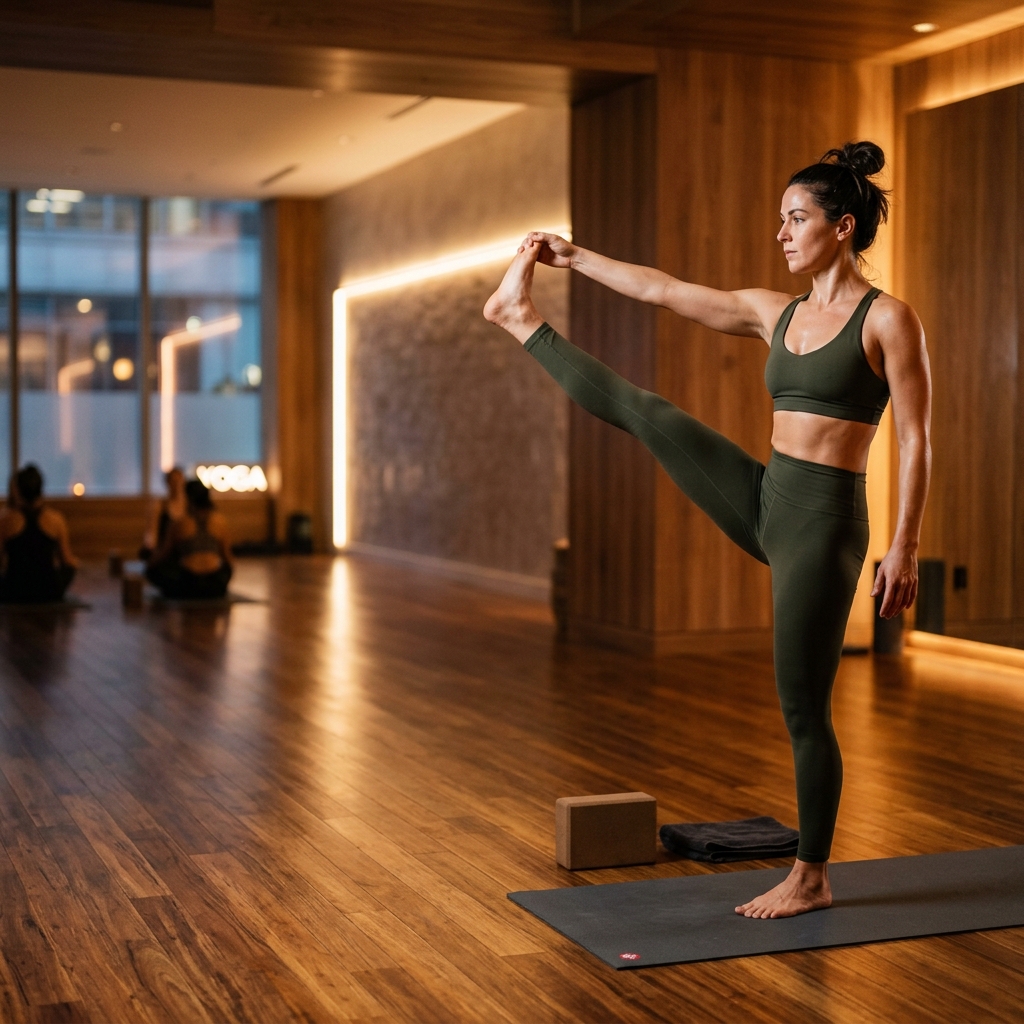
| Standing Head-to-Knee | Over-flexion of spine; knee hyperextension | Keep standing knee bent; hold the shin/knee instead of the foot |
| Triangle Pose (Trikonasana) | Over-collapsing the chest; knee strain | Place a cork block under the bottom hand; rest elbow on thigh |
| Cobra Pose (Bhujangasana) | Compressing the lumbar spine | Keep elbows bent; lift chest using back strength, not arm push |
| Camel Pose (Ustrasana) | Hyperextension of neck; lower back compression | Keep hands on lower back; do not drop the head back completely |
2. Modifying for Beginners and Deconditioned Students
For a beginner, the heat alone is a massive stressor. Adding complex postures can lead to hyperventilation or dizziness. When guiding beginners, emphasize these modifications:
- Bend the Knees: In all standing forward folds (like Half Tortoise or Standing Separate Leg Stretching), cue a generous bend in the knees. This protects the hamstrings and lower back.
- Shorter Poses: Encourage students to hold postures for half the time and spend the rest of the posture standing in mountain pose or resting in Savasana.
- Normal Breathing: Remind students that if they cannot breathe calmly through their nose, they are working too hard. Encourage a resting Child’s Pose immediately.
3. Navigating Injuries: Safe Props and Pacing
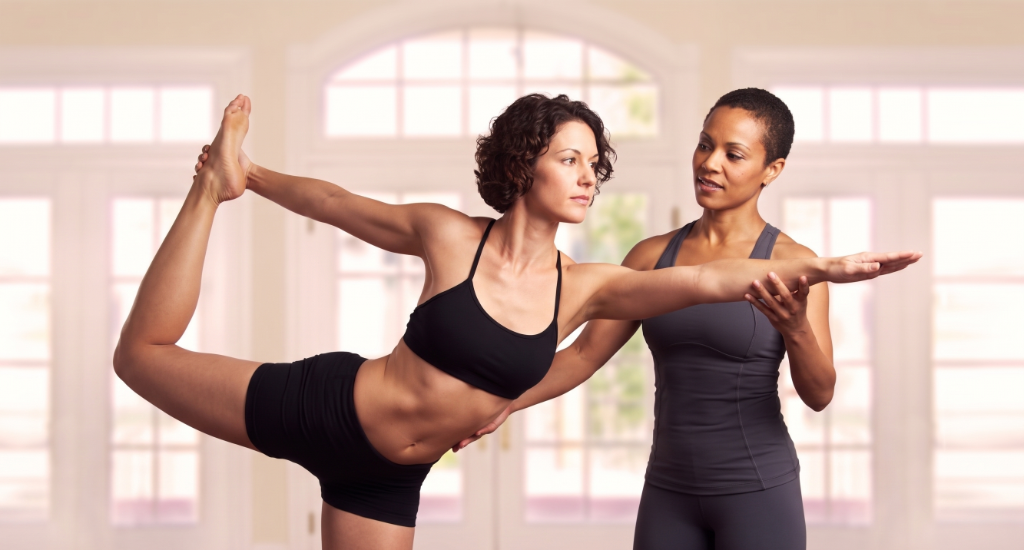
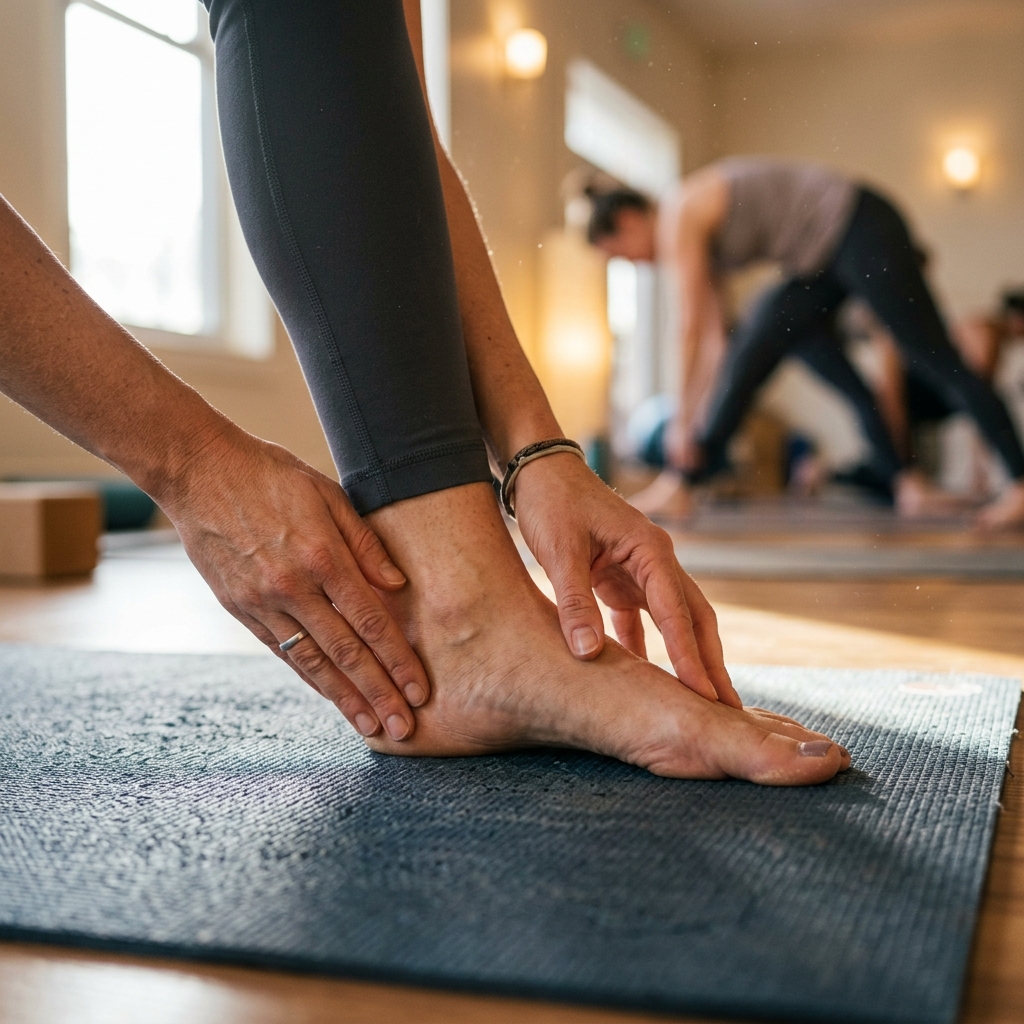
If a student has a history of knee, shoulder, or lower back issues, practicing in the heat requires caution. As a teacher, you must actively offer and hand out props. Cork blocks are highly recommended because they do not slip when coated in sweat. Use blocks to bring the floor closer to the student in standing poses, reducing strain on the lower back and hips, as detailed in our guide on hot yoga humidity level requirements.
4. Pregnancy in the Heated Room: Crucial Guidelines
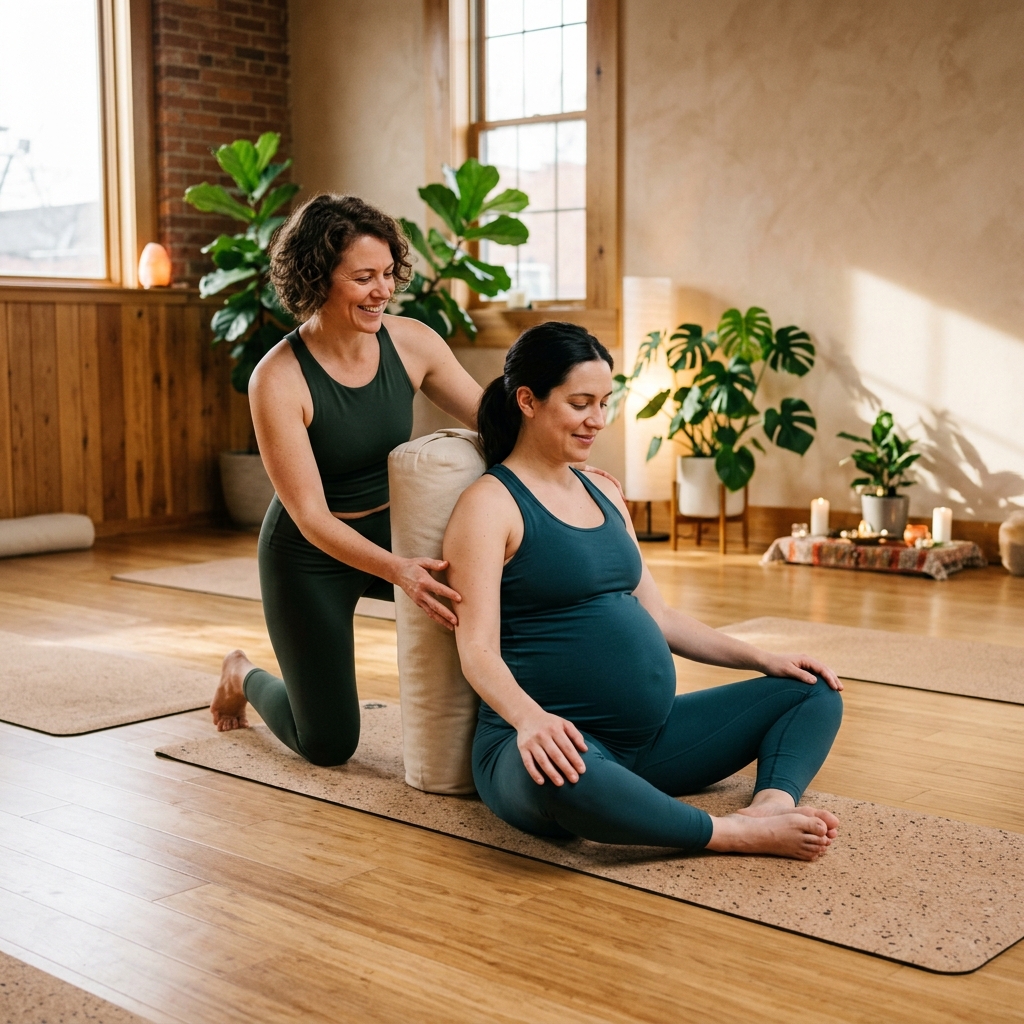
Teaching a pregnant student in a hot room requires strict protocols. If a student is pregnant, you must modify their practice to protect both mother and child:
- Cap the Core Temperature: Pregnant women should never let their core temperature exceed 101°F. Instruct them to practice near the door, take frequent breaks, and never push to exhaustion.
- No Prone Poses: Avoid all postures that lie flat on the stomach (like Locust or Bow Pose). Modify these to standing chest openers.
- No Deep Twists: Avoid abdominal twisting, which compresses the uterus. Replace with gentle upper-back twists. Advise them on the specific medical contraindications detailed in our checklist on who should not do hot yoga.
Frequently Asked Questions
Is it safe to use blocks and straps in a hot room?
Yes. Props are essential tools for hot yoga. However, ensure you use cork blocks (which provide excellent grip when wet) rather than foam blocks (which become slippery and unstable under sweat). Always clean props thoroughly after class.
How do I cue a student who refuses to modify a pose?
Do not call them out individually. Offer general, anatomical cues from the podium: *”If your standing leg is bending, you are bypassing the hamstring stretch. Bring your hands to your hips, lock your knee, and prioritize alignment over depth.”*
Should pregnant students practice hot yoga?
Only if they had a consistent hot yoga practice before pregnancy, have explicit clearance from their OB-GYN, and practice with significant modifications (never pushing past 60% effort, staying near the draft, and drinking double the water).
What is the best modification for Standing Bow Pulling Pose?
If a student cannot reach their foot, instruct them to hold their ankle or use a strap. If balance is an issue, have them practice with one hand resting gently against a wall for support.
Medical Disclaimer: The information in this article is for educational and informational purposes only. Practicing hot yoga increases cardiovascular strain and core temperature. Consult a medical professional before starting home hot yoga if you have heart conditions, blood pressure issues, autonomic nervous disorders, or if you are pregnant. Exit the heated room immediately if you experience dizziness, nausea, or lightheadedness.