
Keeping students motivated in a room heated to 105°F is as much a mental challenge as it is a physical one. When the sweat starts pouring and fatigue sets in, physical instructions alone aren’t always enough to keep a class engaged. As an instructor, you must provide a mental anchor. This is why incorporating creative hot yoga class theme ideas is so valuable. In our fifteen years of managing studios and mentoring teaching staff, we have found that classes built around a central, cohesive theme help students push through physical limits and find a deeper meditative focus. However, themes in a hot room must be handled with care. If you over-explain a theme during high-cardio standing flows, you risk distracting your students. Let’s explore how to structure class themes under high heat, share our top 12 theme ideas, and outline how to script them into your classes.
Theme Planning: The 3-Part Integration Formula
To integrate a theme smoothly without distracting from alignment or safety cues, follow this simple formula:
- The Centering (Pre-Class): Introduce the theme during initial pranayama or child’s pose (1 to 2 minutes).
- The Anchor (Mid-Class): Reference the theme briefly during transition blocks or recovery Savasanas.
- The Integration (Post-Class): Tie the theme back to the physical effort during final Savasana centering.
1. The Hot Yoga Theme Matrix: 12 Creative Concepts
Class themes must match the physical demand of the heated environment. Here is our breakdown of 12 theme concepts categorized by their class focus:
| Theme Category | Core Concept | Best Posture Focus | Sample Script Cues |
|---|---|---|---|
| Surrender & Release | Letting go of expectations; releasing physical tension | Deep hip openers, Half Pigeon, Spine Twists | *”Let your sweat carry away whatever tension you are holding onto.”* |
| Stability & Grounding | Finding your base; rooting through feet and legs | Standing balance series, Tree Pose, Eagle Pose | *”Root down through your heel to rise with absolute stability.”* |
| Detachment (Vairagya) | Observing thoughts without judgment or reaction | Awkward Pose, Standing Head-to-Knee | *”Observe the heat and discomfort without reacting to it.”* |
| Tapya (Self-Discipline) | Building internal fire; cultivating resilience | High-cardio flow series, Warrior II, Plank holds | *”Let the physical heat build your mental resilience.”* |
Structuring your class around these concepts keeps the sequence cohesive and provides a clear narrative arc for your students. To learn more about sequencing, check out our guide on hot yoga sequencing rules.
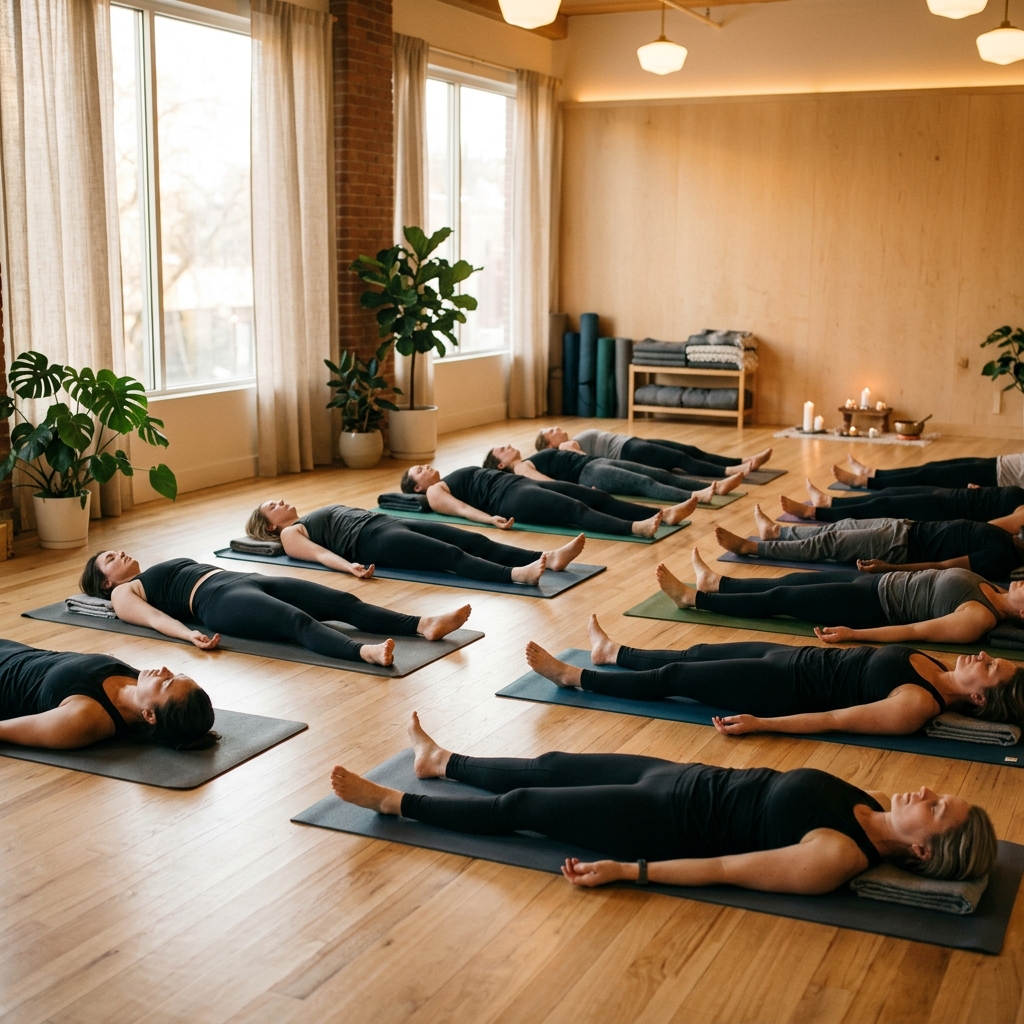
2. How to Script Your Themes Without Cluttering Dialogue
In a hot room, your primary responsibility is student safety. If you are speaking constantly about philosophy while students are struggling to breathe in a balancing pose, you are not teaching effectively. Your instructions must remain action-oriented. Save your thematic scripting for the resting blocks. For example:
- Pranayama: Introduce the theme during the opening breathing exercises.
- Savasana Breaks: Offer a single, motivating sentence during the 20-second resting Savasanas between floor backbends.
- Final Centering: Deliver your final thematic thought while students are cooling down. Refer to our guide on the hot yoga dialogue script to balance alignment commands with thematic cues.

3. Three Golden Rules of Thematic Teaching
When selecting and delivering your class themes, always keep these three rules in mind:
- Be Authentic: Only teach themes that you have personally experienced or practiced. Students can immediately sense insincerity.
- Keep It Simple: Focus on one central word or phrase. Don’t try to explain complex philosophy in a 105°F room.
- Prioritize Alignment: If a student’s form is collapsing, drop the theme immediately and deliver direct safety cues.
Frequently Asked Questions
Can I teach themes in a traditional Bikram 26&2 class?
In a strict, lineage-based Bikram studio, the dialogue script is fixed, and adding external themes is typically discouraged. However, you can naturally weave subtle thematic elements into your vocal tone, pacing, and the focus you set during the opening breathwork.
How do I choose the right theme for a beginner class?
For beginners, focus on **grounding and breathing**. The heat is already a massive mental stressor; themes built around acceptance, taking breaks, and nasal breathing will help them stay calm and safe.
How long should my thematic talks be during class?
Keep them brief. Pre-class introductions should last **1 to 2 minutes**, mid-class reminders should be single sentences, and final integration thoughts should be under **3 minutes**.
Should class music reflect the theme?
Yes. If your theme is grounding, use ambient, low-frequency beats. If your theme is tapya (building fire), select higher-energy rhythms for the standing flow, tapering off to soft, acoustic sounds during the floor series.
Medical Disclaimer: The information in this article is for educational and informational purposes only. Practicing hot yoga increases cardiovascular strain and core temperature. Consult a medical professional before starting home hot yoga if you have heart conditions, blood pressure issues, autonomic nervous disorders, or if you are pregnant. Exit the heated room immediately if you experience dizziness, nausea, or lightheadedness.