
The Physics of Grip: How to Prevent Slipping in Hot Yoga Classes
Practicing hot yoga in a room heated to 105°F (40°C) with 40% humidity pushes body temperature to its limits, resulting in significant sweat. When sweat pools on your mat, it creates a thin barrier of water that induces hydroplaning, causing hands and feet to slide. Discovering effective hot yoga mat slippage solutions is essential for a safe, stable, and focused practice. In this comprehensive guide, we will analyze the physics of mat materials, explore top traction strategies, and help you build a slip-free foundation.
Open-Cell vs. Closed-Cell Mat Physics under 40°C Humidity
The primary physics behind slippage lies in whether your mat is closed-cell or open-cell. Closed-cell mats (like EVA or PVC) seal out water, causing sweat to pool on top. Open-cell mats (like PU or Natural Rubber) feature micro-pores that draw sweat in, keeping the surface dry and increasing friction.
When you practice on a closed-cell mat, the sweat has nowhere to go. It sits on the surface, forming a micro-layer of water. Under the pressure of your hands or feet, this layer undergoes hydroplaning—the same physical phenomenon that causes car tires to lose traction on wet roads. Open-cell mats, by contrast, act like a sponge. The capillary pressure within the micro-pores pulls moisture away from the surface instantly, maintaining direct skin-to-mat contact.
3-Column Sweat Absorption Comparison
| Mat Material | Cell Structure Type | Sweat Absorption & Grip Performance |
|---|---|---|
| Polyurethane (PU) | Open-Cell | Excellent. Surface moisture is pulled into the pores instantly. Grip increases as sweat increases. |
| Natural Tree Rubber | Semi-Open Cell | Very Good. Naturally sticky, though it can become saturated in intense 90-minute classes. |
| Cork Composite | Open-Cell | Adaptive. Suberin wax in cork is activated by moisture, making it stickier as it gets wetter. |
| PVC / EVA | Closed-Cell | Poor. Sweat pools on top, causing hydroplaning unless paired with a microfiber towel. |
10 Effective Hot Yoga Mat Slippage Solutions
- Pre-dampen your microfiber towel: Spraying a light mist of water on your towel before class activates the microfiber fibers immediately. Microfiber requires initial moisture to create traction; dry microfiber on dry mats slips easily.
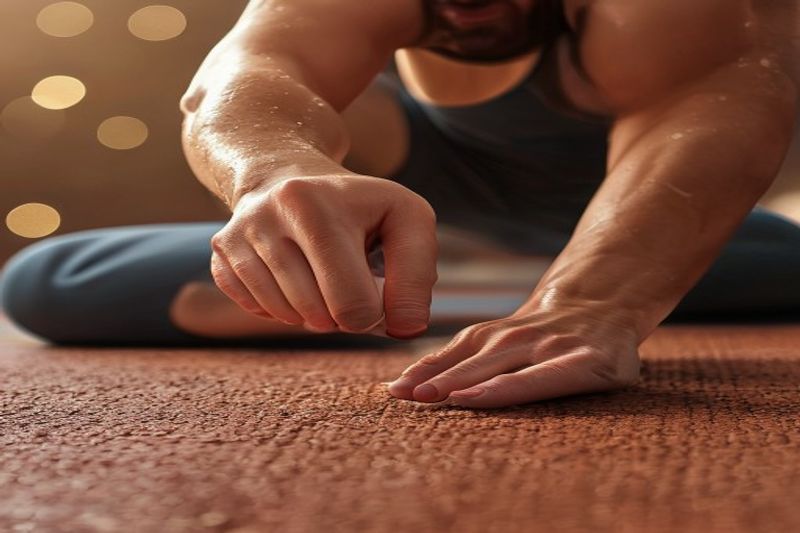
- Spread finger pads actively (Hasta Bandha): Pressing firmly through the perimeter of your palms and clawing the mat with your fingertips creates a dome structure in the hand, lifting weight off the carpal tunnel and preventing slides.
- Choose Polyurethane (PU) mats: PU features open-cell technology that absorbs sweat directly into the core, keeping the top surface dry even during heavy sweating.
- Clean your mat regularly: Skin oils and sweat residues clog open-cell pores, reducing grip. Wipe it down with a dilute vinegar-water solution after every class to maintain cleanliness.
- Use a specialized microfiber yoga towel: Microfiber towels feature silicone nubs on the underside to grip the mat, and the fabric absorbs sweat to increase your stability.
- Avoid fabric softeners: Softeners leave a waxy coating on towels and clothing that repels water, reducing sweat absorption and causing slippage.
- Spread your toes wide: Spreading your toes increases the surface area of your foot in contact with the mat, creating a more stable, slip-resistant base.
- Leverage cork composite mats: Cork contains suberin, a natural waxy substance that becomes tackier and grippier when wet.
- Keep a small hand towel nearby: Wiping sweat from your face, arms, and legs during breaks prevents oils from dripping onto your mat.
- Strengthen your core: A strong core helps distribute your weight evenly, reducing the heavy downward pressure on your hands and feet that causes slides.
Why Wet Poses Pose Joint Injury Risks
Practicing on a slippery mat is not just annoying; it is a significant safety hazard. When your hands or feet slide during loaded postures like Downward-Facing Dog, Warrior II, or Crescent Lunge, your nervous system triggers a panic response, causing your stabilizer muscles to contract violently to keep you upright. This sudden, uncoordinated contraction under load can cause micro-tears in the muscles and tendons.
Furthermore, slippage compromises joint alignment. If your back foot slides outward in Warrior II, it forces the front knee to collapse inward, placing lateral stress on the medial collateral ligament (MCL). In balance postures like Standing Bow, a slip forces the ankle joint to roll, leading to potential sprains. Maintaining a dry, high-traction foundation is crucial to protect your joints, ligaments, and tendons from acute and chronic injury under heat.
From an orthopedic perspective, joint alignment is highly dependent on active proprioceptive feedback. When a practitioner feels their base sliding, the immediate instinct is to tucker or tense the surrounding joint capsules. In a high-temperature room where muscles are already deeply relaxed due to heat, this sudden reflex contraction happens while the connective tissues are at their most vulnerable. The combination of heat-induced ligament laxity and sudden, jerky stabilization movements is a recipe for joint subluxation, tendonitis, and severe ligament strain. Instructors must emphasize safety and alignment over depth, encouraging students to back out of a pose if they cannot maintain a slip-free base.
The Micro-Biome of Open-Cell Mats: Hygiene and Health
While open-cell mats (like Polyurethane and Natural Rubber) offer superior sweat absorption and traction, their sponge-like structure presents a hygiene challenge. In a hot yoga room, the air is thick with moisture and skin cells. As your mat draws in sweat, it also pulls in microscopic skin debris, sebum oils, and bacteria. The warm, humid interior of an open-cell mat becomes an ideal incubator for mold, mildew, and dermatophytes (fungi that cause ringworm and athlete’s foot).
To prevent skin infections and keep your mat from smelling sour, weekly sanitization is mandatory. Standard soap will clog the mat’s pores and make it slippery, so you must use an enzymatic or acidic cleaner that rinses clean. Wiping the mat down immediately after class and allowing it to air-dry flat in a well-ventilated area ensures that moisture doesn’t remain trapped within the core of the mat.
Microbiological studies of shared and unwashed yoga mats have revealed the presence of pathogenic organisms like Staphylococcus aureus (which causes staph infections) and various fungal spores that thrive in high-temperature wellness facilities. When you press your face onto a sweat-laden mat in resting poses like Balasana (Child’s Pose) or Savasana, you expose your skin directly to these colonizing microbes, increasing the risk of acne, skin rashes, and fungal infections. Using a dedicated antibacterial microfiber towel as a barrier and using a certified organic botanical spray containing thymol or tea tree oil after class is highly recommended to protect your skin microbiome and ensure long-term hygiene.
Step-by-Step Deep Cleaning Protocol
To keep your open-cell mat grippy, you must remove the skin oils and salt crystals that clog the pores. Follow this weekly cleaning routine:
- Mix the Solution: Combine 1 cup of white distilled vinegar with 3 cups of warm water in a spray bottle. Add a few drops of tea tree oil for natural antibacterial properties.
- Spray and Wipe: Mist the mat lightly and wipe it down with a soft microfiber cloth. Do not scrub too hard, which can wear down the textured surface.
- Air Dry Flat: Lay the mat flat in a shaded, well-ventilated area until it is completely dry. Never leave it in direct sunlight for extended periods, as UV rays degrade natural rubber.
Physiological Science Hook
Scientific research shows that: Evaporative cooling is the primary mechanism of heat dissipation in yoga. If humidity is too high, sweat pools on the skin instead of evaporating.. By prioritizing open-cell gear and proper hand hooks, you support your body’s natural thermoregulation while staying grounded in the heat.
Day-Specific Posture Focus: Warrior II (Virabhadrasana II)
Press the outer edge of your back foot firmly into the mat. This mechanical lock prevents the foot from sliding outward under hip torque.
Common Mistakes to Avoid
- Using Gym Chalk: Chalk dries your hands temporarily but leaves a dusty residue that clogs mat pores, permanently ruining the mat’s grip.
- Using Laundry Detergent: Standard detergents contain surfactants that leave a slippery film. Always use a specialized mat spray or vinegar solution.
- Rolling the Mat Wet: Rolling a wet, sweaty mat traps moisture, leading to mold, bacteria growth, and unpleasant odors.
Frequently Asked Questions
Why do my hands slip in Downward-Facing Dog?
Downward Dog places a significant portion of your body weight on your hands. If sweat pools on your palms, it creates a lubricating barrier on closed-cell mats. Activating Hasta Bandha—pressing through the perimeter of your palms and engaging your finger pads—lifts the center of your hand and stops the slide.
How often should I wash my yoga towel?
You should wash your yoga towel after every class. Sweating leaves behind bacteria, skin cells, and oils that will transfer back to your mat, causing odors and reducing grip in your next practice. Avoid fabric softeners during laundry, as they leave a water-repelling wax coating.
Is vinegar safe for natural rubber mats?
Yes. A dilute white vinegar solution (1 part vinegar to 3 parts water) is safe for natural rubber and polyurethane mats. It breaks down skin oils without degrading the natural rubber fibers. Avoid harsh alcohol-based cleaners, which dry out the material.
Why does my new mat feel slippery?
Many new yoga mats (especially closed-cell PVC mats) have a thin protective film left over from the manufacturing process. Performing a coarse sea salt scrub and letting the mat dry in the sun activates the surface and breaks in the grip.
Can I machine wash my yoga mat?
Generally, no. Polyurethane and natural rubber mats are too delicate for the agitation and spin cycles of a washing machine. The machine can tear the material, distort its shape, and trap water in the core. Spot cleaning and rinsing in a bathtub is the safest method.
What is the average lifespan of an open-cell polyurethane mat?
For a daily practitioner, an open-cell polyurethane (PU) mat will typically last between 6 to 12 months. Because the material is porous and actively absorbs sweat and oils, the micro-pores will eventually become clogged, causing the surface to lose its high-friction grip. Over time, the constant absorption of moisture and exposure to heat will cause the PU top layer to break down, crack, or peel. To extend its lifespan, clean it regularly with water and mild vinegar, and never roll it up while wet.
How can I prevent my hands from slipping if I have hyperhidrosis?
If you experience excessive sweating (hyperhidrosis), standard mats may not be enough. You should use a high-quality cork mat, which has a natural substance called suberin that becomes stickier when wet, or lay a premium microfiber yoga towel over your mat. Wiping your hands and feet with a dry towel before class, avoiding hand lotions, and using yoga grip gloves can also help you maintain traction during challenging postures.
⚠️ Medical Disclaimer: The information in this article is for educational purposes only. Always consult a physician before starting any high-temperature exercise program. If you experience dizziness, nausea, or lightheadedness, exit the hot room immediately, lay flat, and sip cool water.
Ready to Start Your Training?
Become a certified Hot Yoga teacher today. Explore our flexible training programs.