
Hands-On Adjustments for Hot Yoga: Safe Touch & Assist Guidelines
Guiding a student’s alignment with physical touch is a powerful teaching tool. It can help a practitioner find space, release tension, and understand a posture’s biomechanics on a deeper level. But when you step off the podium in a room heated to 105°F, the rules of touch change completely. Offering hands on adjustments for hot yoga requires specialized techniques. Between sweat-slick skin, high cardiovascular strain, and heightened emotional vulnerability in the heat, instructors must approach physical assists with absolute care, consent, and safety. In our studios, we train our instructors to prioritize verbal adjustments first, and use physical adjustments only when necessary to prevent injury. Let’s look at the touch protocols, safety boundaries, sweat management strategies, and biomechanical tips for assisting in hot yoga.
Assist Protocol: Quick Touch & Alignment Reference
Before performing a physical adjustment in a heated class, always run through this safety checklist:
- Verbal Consent First: Always ask permission before touching. Use consent tokens or direct, quiet verbal questions.
- Use a Towel Barrier: Never touch sweat-slick skin directly. Place a clean towel over the student’s shoulder or hip.
- Apply Steady, Grounding Force: Do not pull or push. Use grounding, stabilizing pressure to guide, not force.
- Avoid Hypermobility Zones: Do not adjust joints showing signs of overextension or hyperflexion.
1. Consent and Communication in the Heated Space
Because the heat acts as a physical stressor, students are more sensitive to touch. The first responsibility of any instructor is establishing a safe container. This begins with consent. Here is how we break down the touch protocols in our training manuals:
| Assist Method | Best For | When to Avoid | Key Safety Rule |
|---|---|---|---|
| Verbal Cues | 90% of adjustments; group alignment corrections | Hearing impaired students; complex balance blocks | Lower vocal pitch; use action verbs |
| Visual Modeling | Beginners; demonstration of modifications | During high-heat cardiovascular active poses | Step off podium to model; do not practice in heat |
| Hands-On Touch | Safety corrections; preventing ligament hyperextension | Students who haven’t given consent; extreme sweating | Always use a towel barrier; ask quietly first |
By establishing clear touch boundaries, you create a space where students feel safe and supported. To learn more about environmental management and safety checks, refer to our manual on the responsibilities of a hot yoga teacher.
2. Sweat Management and Towel Barrier Techniques
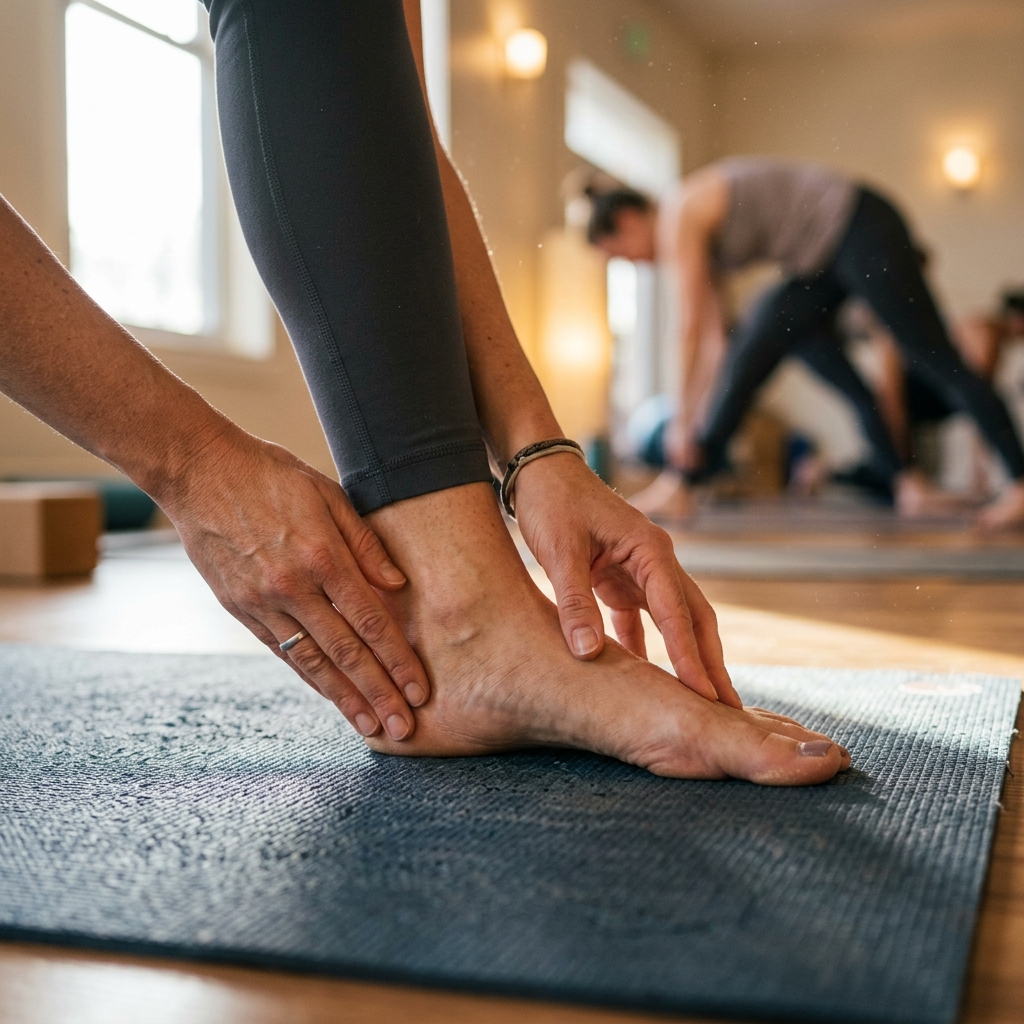
The most practical challenge of hot yoga assists is sweat. Direct skin-on-skin contact in a heated room is slippery, unhygienic, and can cause a loss of grip, leading to joint strain. Instructors must learn to use a towel barrier. Always carry a clean, dry hand towel during class. When adjusting a student:
- Drape the Towel: Gently drape your hand towel over the student’s hip crease, shoulder blade, or ankle.
- Apply Pressure: Place your hands over the towel to execute the adjustment. This absorbs sweat, prevents slipping, and respects the student’s personal space.
- Keep Hands Dry: Regularly dry your hands on your personal towel between assists. Refer to our guide on how to teach hot yoga safely to maintain proper hygiene during adjustments.

3. Biomechanical Safety: Guiding vs. Forcing
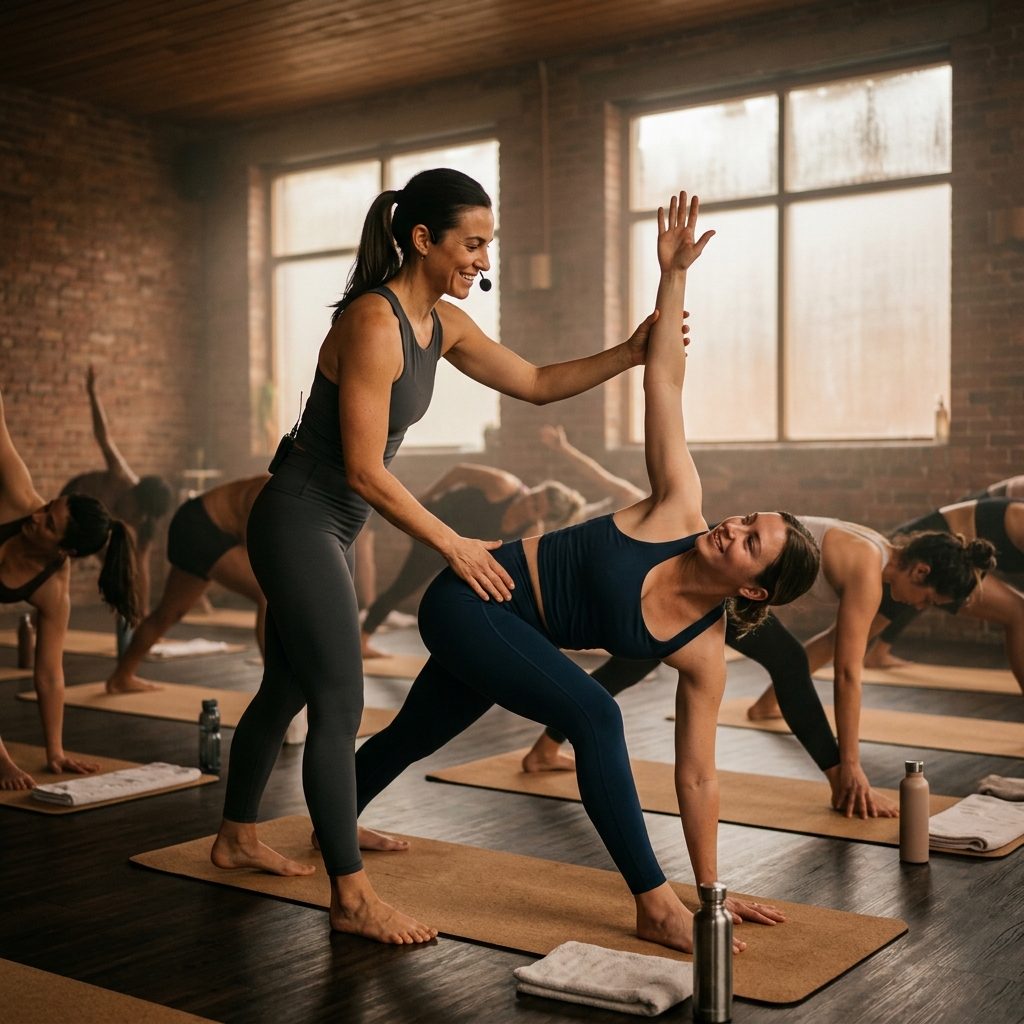
In a 105°F room, muscles are highly pliable, and joint receptors are slightly desensitized. This means students cannot accurately feel when they are overstretching. When performing hands on adjustments for hot yoga, you must never force a student deeper into a pose. Your touch should act as a stabilizing anchor, helping the student align their bones so their muscles can stretch safely, rather than pushing their joints past their natural range of motion.
Frequently Asked Questions
Should I use consent cards in a hot yoga class?
Yes. Consent cards (which students place at the top of their mat to indicate if they welcome touch) are highly recommended. However, because cards can stick to sweat-soaked towels, we recommend checking them visually before approaching a student’s mat.
What is the safest way to adjust a student in Triangle Pose?
Instead of pulling their top arm back, stand behind them, place one hand on their tailbone for grounding, and use the other hand to gently guide their ribcage open, encouraging length through both sides of the spine.
How do I handle a student who reacts negatively to an adjustment?
Step back immediately. Offer a quiet, sincere apology: *”I apologize. I’ll give you space.”* Continue leading the class from the podium, and check in with them privately after class to ensure they are feeling alright.
Are hands-on assists required to be a successful hot yoga teacher?
No. Many successful teachers lead incredible classes using only verbal cues and visual modeling. If you are uncomfortable with touch or teach in a very packed room, prioritizing verbal cueing is the safest option.
Medical Disclaimer: The information in this article is for educational and informational purposes only. Practicing hot yoga increases cardiovascular strain and core temperature. Consult a medical professional before starting home hot yoga if you have heart conditions, blood pressure issues, autonomic nervous disorders, or if you are pregnant. Exit the heated room immediately if you experience dizziness, nausea, or lightheadedness.