
Infrared Heaters for Yoga Studio and Home: The Ultimate Setup Guide
Practicing hot yoga is a transformative experience, combining deep physical stretching, intense cardiovascular work, and a profound mental release. For many studio owners and dedicated home practitioners, the biggest challenge is not the poses themselves, but finding the right heating system. Standard forced-air systems often make the room stuffy, blow dry air around, and lead to high energy bills.
This is why professional studios and luxury home setups are increasingly turning to radiant technology. Installing infrared heaters for yoga studio environments has become the gold standard for delivering comfortable, natural, sun-like heat. But how does this technology work, and how does it compare to standard space heaters?
Whether you are building a commercial space or trying to figure out how to heat a room for hot yoga at home, understanding the principles of thermal heat and moisture management is crucial. In this guide, we will explore why infrared heaters are the superior option, analyze the best humidity level for hot yoga class settings, and detail the electrical and structural steps to build your dream heated studio.
Why Infrared Heaters for Yoga Studio and Home Practice Are Superior
To understand why professional spaces choose infrared heaters for yoga studio heating, we must look at the difference between convection heat and radiant heat.
Convection vs. Radiant Heating
Traditional space heaters and central HVAC systems rely on convection heating. They heat the air in the room, which then blows around and warms your skin. This causes several problems in a yoga setting:
- Stuffiness and Dryness: Blowing hot air dries out the nasal passages, throat, and eyes, making deep breathing (pranayama) uncomfortable.
- Heat Stratification: Hot air rises. In a convection-heated room, the warmest air hovers at the ceiling, while the floor level (where you practice) remains cold.
- Noise and Dust: Fans blow dust, allergens, and pet dander around the room, which can irritate your lungs.
Radiant infrared heaters do not heat the air. Instead, they emit electromagnetic waves (similar to the sun) that travel through the air and warm solid objects directly—including your body, floor, and yoga mat. This offers massive benefits:
- Deep Muscle Penetration: Infrared waves penetrate beneath the skin surface, warming your muscles and joints from the inside out. This increases flexibility safely and reduces the risk of strain.
- Silent and Draft-Free: Infrared panels have no moving parts. They operate in complete silence and do not create drafts, allowing you to focus entirely on your breath.
- Instant, Grounded Heat: Because the floor absorbs the radiant waves, your mat remains warm and comfortable, preventing cold feet during floor postures.
How to Heat a Room for Hot Yoga at Home: A Step-by-Step Setup
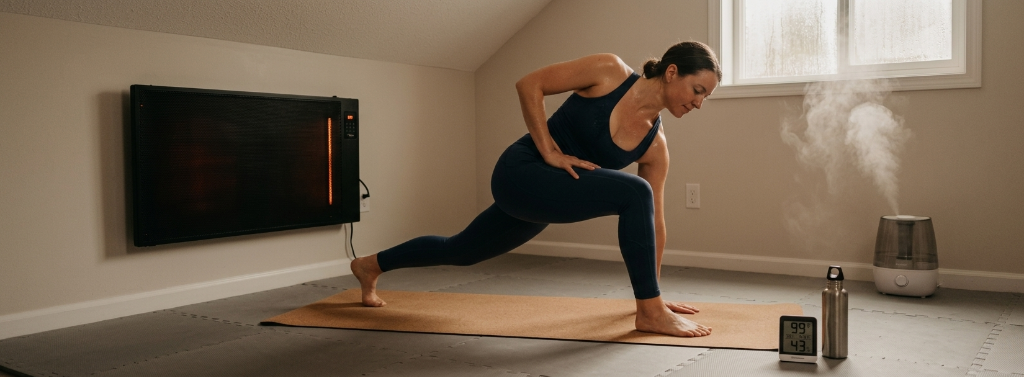
If you want to know how to heat a room for hot yoga at home, you need to combine radiant heat panel placement with draft management to create an efficient “yoga bubble.” Here is how to prepare your space:
1. Choose and Prep Your Micro-Climate
Do not attempt to heat your entire house. Pick a small room (100 to 150 square feet) with standard ceilings. Close all windows, blinds, and central HVAC vents. Draft-seal the door by rolling up a bath towel and pushing it tightly against the bottom gap to keep the heated air locked inside.
2. Floor Insulation: Protect Your Joints
If your subfloor is cold concrete, tile, or hardwood, it will act as a thermal sink, constantly drawing heat away from your feet. Lay down foam gym tiles, a blanket, or a secondary yoga mat underneath your primary mat. Using a high-quality mat like the Manduka PRO Yoga Mat or the Stakt Foldable Yoga Mat Pro on top of this insulation ensures a stable, cushioned, and warm foundation.
3. Splitting the Electrical Load (The Golden Rule)
To reach a target temperature of 95°F to 100°F (35°C–38°C) at home, you will likely need two space heaters (a portable infrared heater and a ceramic backup heater).
Standard home circuits can only handle about 1,800 Watts. Since most space heaters draw 1,500 Watts on high, plugging two into the same room will immediately trip your breaker. Plug Heater #1 into the yoga room, and run a heavy-duty 12-gauge extension cord under the door to an outlet in a different room (like the kitchen or hallway) connected to a different circuit breaker. This splits the load safely.
The Best Humidity Level for Hot Yoga Class and Home Sessions
Heating the room is only half the battle. To sweat safely and breathe easily, you must manage the relative humidity. Dry heat evaporates sweat too quickly, dehydrating you without building up that cleansing sweat layer, while excessive humidity prevents your body from cooling down.
Finding the Sweet Spot
The consensus among exercise scientists and experienced instructors is that the best humidity level for hot yoga class settings is between 45% and 50% relative humidity (RH).
At this humidity level, the moisture in the air acts as a thermal conductor, making the room feel warmer and more comfortable. It keeps your skin hydrated, prevents chafing, and lubricates your lungs, allowing for deeper, smoother inhalation during intense sequences.
Warm-Mist Humidification is Mandatory
To hit the best humidity level for hot yoga class settings at home, always use a warm-mist humidifier. Avoid cool-mist humidifiers, which work by absorbing heat from the room to evaporate water, actively cooling down your space. A warm-mist humidifier boils water to release warm, clean steam, working in harmony with your infrared heaters to raise both humidity and temperature.
Turn on your warm-mist humidifier on high 20 to 30 minutes before your practice. This gives the humidity time to blend with the radiant heat, creating a warm, tropical climate by the time you step onto your mat.
Selecting the Right Heating Equipment
To help you choose the best setup for your budget and goals, here is a comparison of the most common heating options for yoga spaces:
| Heater Type | Heating Mechanism | Pros | Cons | Best For |
|---|---|---|---|---|
| Infrared Heat Panels | Radiant electromagnetic waves | Deep muscle penetration, completely silent, keeps floor warm, energy-efficient. | Higher upfront cost, slower to heat air directly. | Professional studios, premium home studios. |
| Ceramic Space Heaters | Forced-air convection | Low cost ($30-$50), heats air very quickly. | Blower noise, dries out air, heat rises quickly. | Budget home hot yoga setups. |
| Oil-Radiator Heaters | Radiant convection | Completely silent, holds heat well after turning off. | Very slow to heat up (45+ minutes), heavy. | Consistent daily practitioners who can preheat rooms. |
The 30-Minute Pre-Practice Setup Routine
To ensure your home studio reaches the ideal temperature and relative humidity right when you are ready to begin, follow this pre-class countdown:
- T-30 Minutes: Close the room door, apply your draft-blocking towel under the door crack, and turn both heaters (infrared and backup) to high.
- T-20 Minutes: Turn on your warm-mist humidifier to its high setting. This will start introducing moisture to hit the best humidity level for hot yoga class settings.
- T-5 Minutes: Step into the room with an insulated bottle of cold water. Place a digital thermometer/hygrometer next to your mat to monitor the temperature (target: 95°F–100°F) and humidity (target: 45%–50% RH).
- T-0 Minutes: Begin your practice! Adjust the space heaters to medium or low if the temperature rises above 100°F.
🛑 Safety Precautions for Heated Practice
Practicing in a heated space places additional cardiovascular load on your body. Follow these safety parameters to protect your health:
Acclimatize Gradually
If you are new to heated yoga, start with a temperature of 90°F (32°C) and a shorter 30-minute practice. Over a period of two weeks, allow your body to build heat tolerance before raising the room to 98°F or 100°F. For a detailed guide on what to expect, refer to our guide on hot yoga for beginners.
Prioritize Mineral and Hydration Balance
Sweating depletes water and essential electrolytes like sodium, potassium, and magnesium. Drinking plain water in excess after sweating heavily can lead to mineral dilution (hyponatremia). Keep cold water handy during practice, and always consume an electrolyte supplement post-session to restore balance.
Dress for Moisture Wicking
Avoid loose cotton clothing, which absorbs sweat and clings to your body, trapping heat. Wear technical, synthetic fabrics (nylon/polyester blends) that pull moisture away from your skin to facilitate natural cooling. For apparel recommendations, read our guide on what to wear to hot yoga.
Frequently Asked Questions
Are infrared heaters for yoga studio settings safe to use at home?
Yes, portable infrared heaters are highly safe. Unlike convection heaters, they do not have exposed heating coils that present a fire hazard. They warm objects via electromagnetic waves, similar to the warmth of the sun, and are highly energy-efficient, making them perfect for residential home setups.
What is the best humidity level for hot yoga class practice?
The best relative humidity level is between 45% and 50%. This range keeps the air comfortable to breathe, prevents sweat from evaporating too quickly (which keeps you sweating deeper), and supports your skin’s natural hydration.
Why does my space heater trip the breaker when practicing hot yoga at home?
Space heaters are high-draw appliances, typically pulling 1,500 Watts on high. A standard household outlet circuit is rated for 15 Amps (1,800 Watts). Plugging two heaters into the same room circuit will exceed the limit and trip the breaker. You must run one heater on a heavy-duty extension cord to an outlet in another room on a different circuit breaker.
Can I use a cool-mist humidifier for hot yoga?
No. Cool-mist humidifiers disperse cold droplets that absorb heat from the air to evaporate, which cools the room down. To maintain a warm, tropical hot yoga climate, you must use a warm-mist humidifier that releases warm steam.
Create Your Personal Hot Yoga Sanctuary
Designing a comfortable, heated yoga space is a rewarding investment in your physical and mental health. By using infrared heaters for yoga studio radiant warmth, draft-sealing your room, adding warm moisture to achieve the best humidity level for hot yoga class settings, and splitting your electrical load across two circuits, you can create a professional-grade hot yoga experience right at home.
Roll out your mat, turn on your humidifier, adjust your heaters, and step into your warm sanctuary. Enjoy the physical release and mental clarity of a heated practice from the comfort of your home!
Medical Disclaimer: The information in this article is for educational and informational purposes only. Practicing hot yoga increases cardiovascular strain and core temperature. Consult a medical professional before starting home hot yoga if you have heart conditions, blood pressure issues, autonomic nervous disorders, or if you are pregnant. Exit the heated room immediately if you experience dizziness, nausea, or lightheadedness.
Ready to Start Your Training?
Become a certified Hot Yoga teacher today. Explore our flexible training programs.